
🌍 Setting the Scene
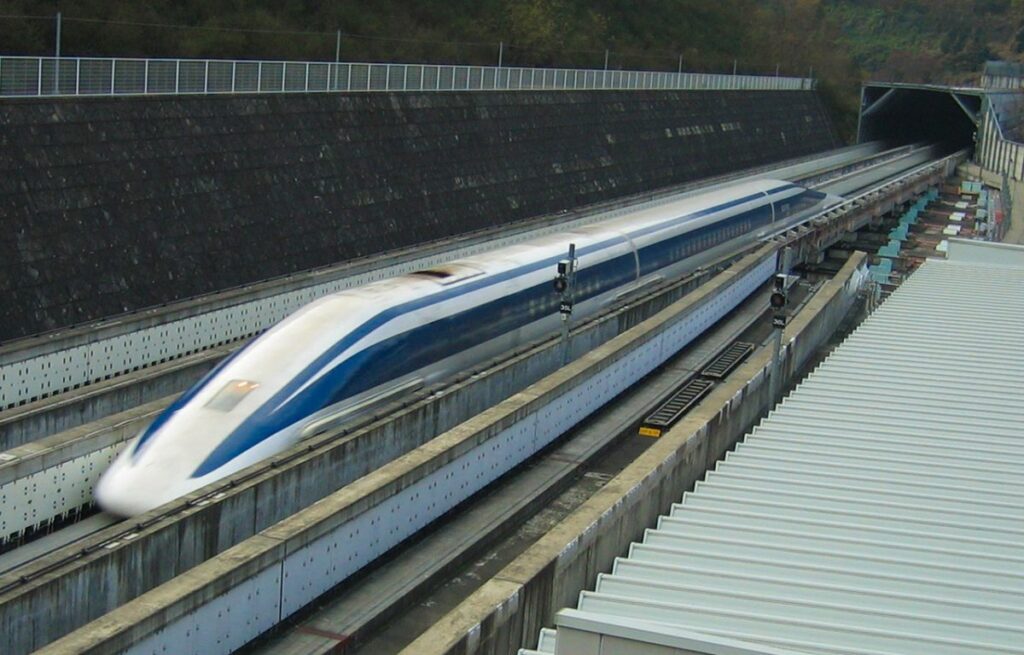
Magnetic levitation (maglev) trains are often portrayed as the future of ultra-fast, sustainable transport. With speeds exceeding 500 km/h and zero wheel-rail friction, they promise efficiency and reduced maintenance. But in Europe, where high-speed rail (HSR) is already well established, maglev faces a tough reality check.
🔎 Current Status in Europe
- No operational maglev lines exist in the EU today. Unlike Japan (Chūō Shinkansen) or China (Shanghai Maglev), Europe has not moved beyond feasibility studies.
- MaDe4Rail Project (2024–2027): A €1.4 million EU-funded initiative exploring maglev-derived systems (MDS). It focuses on technical feasibility, safety, and economic performance, aiming to define a roadmap for possible future adoption.
- Oliver Wyman Report (2024): Highlights maglev as a potential enabler of Europe’s green transport goals, especially when integrated with existing rail infrastructure. It suggests maglev could serve as a bridge toward innovations like hyperloop.
- Past Feasibility Studies: Austria’s PAN-European Corridor IV considered maglev links between Berlin, Prague, Vienna, and Budapest. These remained on paper, with no construction.
⚖️ Why Maglev Struggles in the EU
- High Infrastructure Costs: Maglev requires entirely new tracks and systems, unlike HSR which can upgrade existing rail corridors.
- Political & Regulatory Complexity: EU transport policy emphasizes interoperability and shared standards. Maglev, being non-standard, complicates integration.
- Competition with HSR: Europe already has extensive high-speed rail networks (France, Spain, Germany, Italy). Incremental upgrades are cheaper and politically safer.
- Public Perception: Maglev is often seen as futuristic but impractical, especially given Europe’s cautious approach to transport innovation.
🌱 Opportunities Ahead
- Green Transport Push: EU climate goals may revive interest in maglev as a zero-emission, high-capacity option.
- Urban Applications: Short-distance maglev (airport shuttles, metro-style systems) could be more feasible than intercity lines.
- Research & Innovation: Projects like MaDe4Rail keep maglev on the agenda, ensuring Europe doesn’t fall behind Asia in exploring advanced mobility.
📚 🚧 Reality Check
Maglev in the EU is still experimental. While research projects and consultancy reports highlight its potential, there is no political or financial commitment to build large-scale maglev lines. For now, Europe’s transport future remains firmly tied to high-speed rail, with maglev as a possible—but distant—alternative.assenger experience.